











International shipping’s carbon emissions between 1990 and 2020 are associated with an estimated $963 billion in global economic damages, according
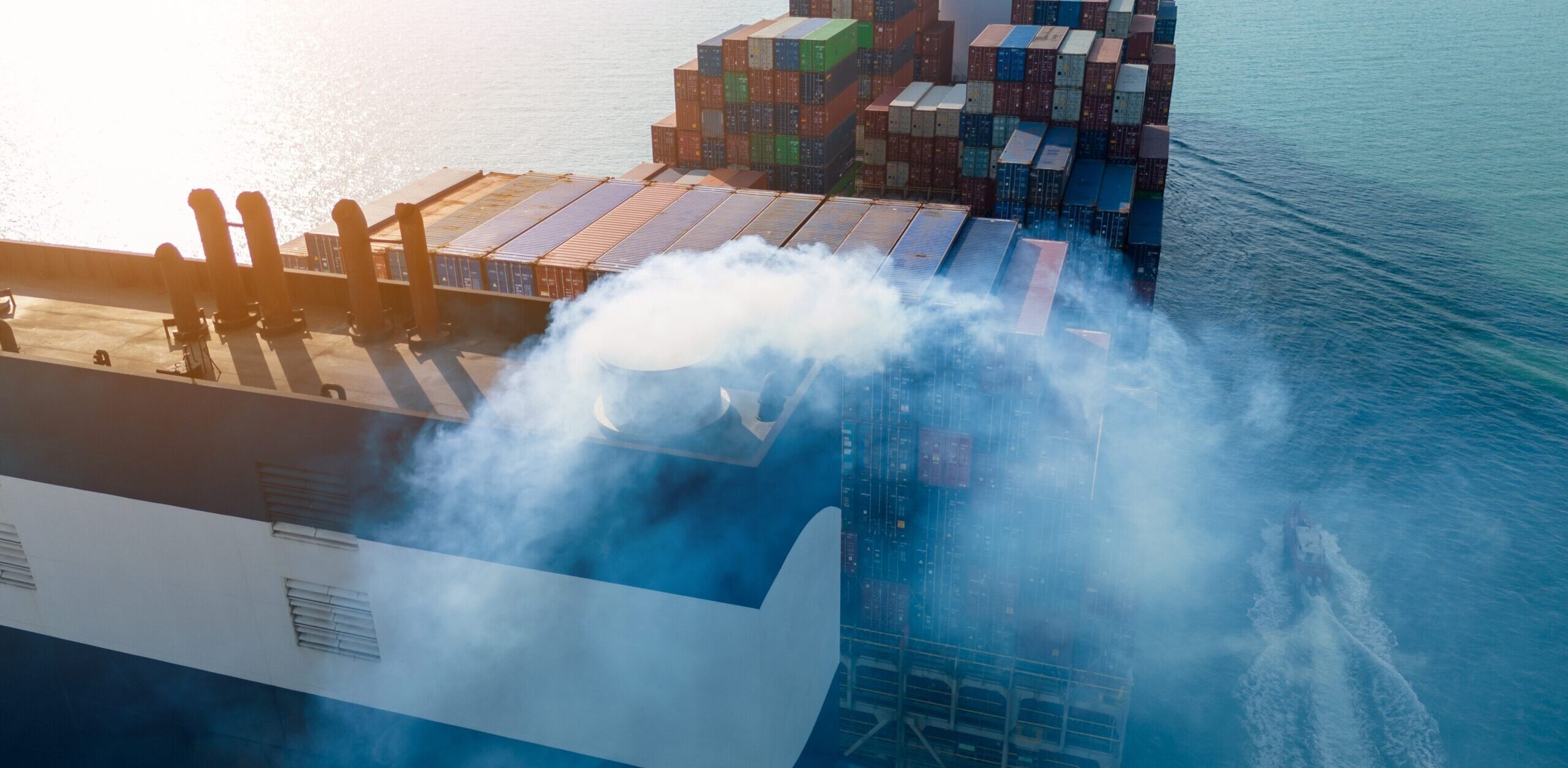
International shipping’s carbon emissions between 1990 and 2020 are associated with an estimated $963 billion in global economic damages, according to new research.
The “Shipping emissions have already cost the world almost a trillion dollars in damages” analysis by Zero Carbon Analytics (ZCA) estimates the economic consequences of international shipping’s historical CO₂ emissions and examines the potential benefits of future reductions under a pathway resembling the International Maritime Organization’s (IMO) proposed Net-Zero Framework.
According to ZCA, international shipping emitted approximately 19.03 billion tonnes of CO₂ between 1990 and 2020. Using emissions data from Climate Action Tracker and a climate damage model developed by researchers at Stanford University, the analysis estimates that these emissions are associated with $962.7 billion in global economic damages.

The calculation links CO₂ emissions to changes in global temperatures and their estimated effects on economic growth, applying a 2% discount rate. The resulting figure represents a modeled estimate of climate-related economic damage, rather than directly measured financial losses.
The findings come as IMO Member States prepare to resume negotiations on the framework later this month, amid continuing disagreements over implementation costs and the design of global greenhouse gas reduction measures.
Economic impacts vary significantly between countries
The analysis finds that the largest absolute economic damages are concentrated in major economies, while some countries in the Middle East and Africa experience greater relative impacts when measured against GDP. The principal findings include:
- Global economic damages: International shipping’s CO₂ emissions between 1990 and 2020 are associated with an estimated $962.7 billion in worldwide economic damages.
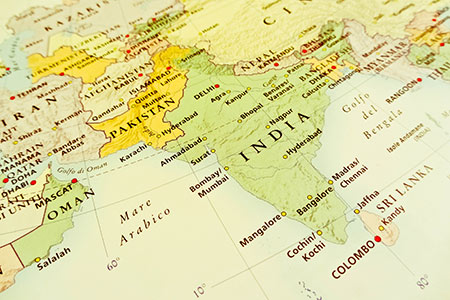
- Largest absolute impacts: The United States accounts for an estimated $280.7 billion, followed by China at $113.5 billion and Japan at $66.8 billion. India and Brazil follow with estimated damages of $49.2 billion and $31.1 billion, respectively.
- Disproportionate relative impacts: The estimated damage attributable to shipping emissions corresponds to 0.35% of the United Arab Emirates’ 2020 GDP, 0.34% for Saudi Arabia, 0.32% for Mali and 0.30% for Burkina Faso.
- Potential emissions reductions: A pathway resembling the IMO Net-Zero Framework could avoid approximately 14.2 billion tonnes of CO₂-equivalent emissions between 2026 and 2050 compared with a business-as-usual scenario.
- Potential health benefits: The modeled emissions reductions could prevent approximately 1.5 million temperature-related deaths worldwide by 2100 and reduce the number of people exposed to unprecedented heat by around 8 million by 2070.
ZCA’s country-level calculations allocate shipping’s estimated global damages according to the geographical distribution of economic losses associated with global emissions. They are therefore modeled attributions rather than directly observed national losses.
The projected emissions and health benefits are also conditional on the assumed decarbonization pathway being achieved.
Potential benefits of the IMO Net-Zero Framework
The research examines the potential consequences of implementing international emissions reduction measures capable of bringing shipping to net-zero greenhouse gas emissions by or around 2050.
To estimate future reductions, ZCA uses Scenario 24 from the IMO’s 2024 comprehensive impact assessment as a proxy for the proposed Net-Zero Framework, comparing it with a business-as-usual, low-growth scenario.
Scenario 24 represents a policy mechanism similar to, but not identical to, the proposed framework. As a result, the estimated benefits should not be interpreted as guaranteed outcomes of the regulations currently under negotiation.
Under the modeled pathway, avoiding approximately 14.2 billion tonnes of CO₂-equivalent emissions by 2050 could prevent an estimated 0.00641°C of additional global warming.
ZCA also estimates that the resulting reduction in temperature-related risks could prevent approximately 1.5 million premature deaths by 2100. The mortality estimate is derived from previously published climate research and depends on assumptions about future emissions, warming and population exposure.
The analysis further identifies potential benefits for marine ecosystems, including reduced heat stress affecting coral reefs.
The economic cost of inaction
The report argues that discussions surrounding the IMO Net-Zero Framework have focused heavily on the financial burden of implementation, while giving less consideration to the wider economic consequences of continued greenhouse gas emissions.
According to the IMO’s 2024 comprehensive impact assessment, the policy scenario used by ZCA as a proxy for the framework would involve approximately $13.78 trillion in aggregate shipping-related costs between 2023 and 2050, compared with $9.62 trillion under the business-as-usual scenario.
This represents an additional $4.16 trillion in modeled aggregate costs over the period.
These estimates include capital expenditure, operational costs, fuel costs and regulatory expenses. They do not represent equivalent net economic losses, as some spending would be reinvested within the shipping sector.
ZCA argues that the economic evaluation of decarbonization measures should also consider the potential damages associated with continued emissions.
Improved methods allow us to calculate the economic impact of emissions by connecting emissions to temperature increase, and temperature increase to economic damage. This essentially reveals the ‘hidden’ costs countries are paying for emissions – a missing part of the picture for IMO regulators wanting to agree on the best possible policy […]
…said Victoria Kalyvas, Senior Research Associate, Zero Carbon Analytics.
Content Original Link:
" target="_blank">