










Lloyd’s Register (LR) and the British Ports Association (BPA) are calling on ports to begin preparing for advanced nuclear technologies,
Lloyd’s Register (LR) and the British Ports Association (BPA) are calling on ports to begin preparing for advanced nuclear technologies, highlighting the need to address maritime safety, regulatory alignment, emergency preparedness and liability before nuclear-powered merchant vessels become commercially widespread.
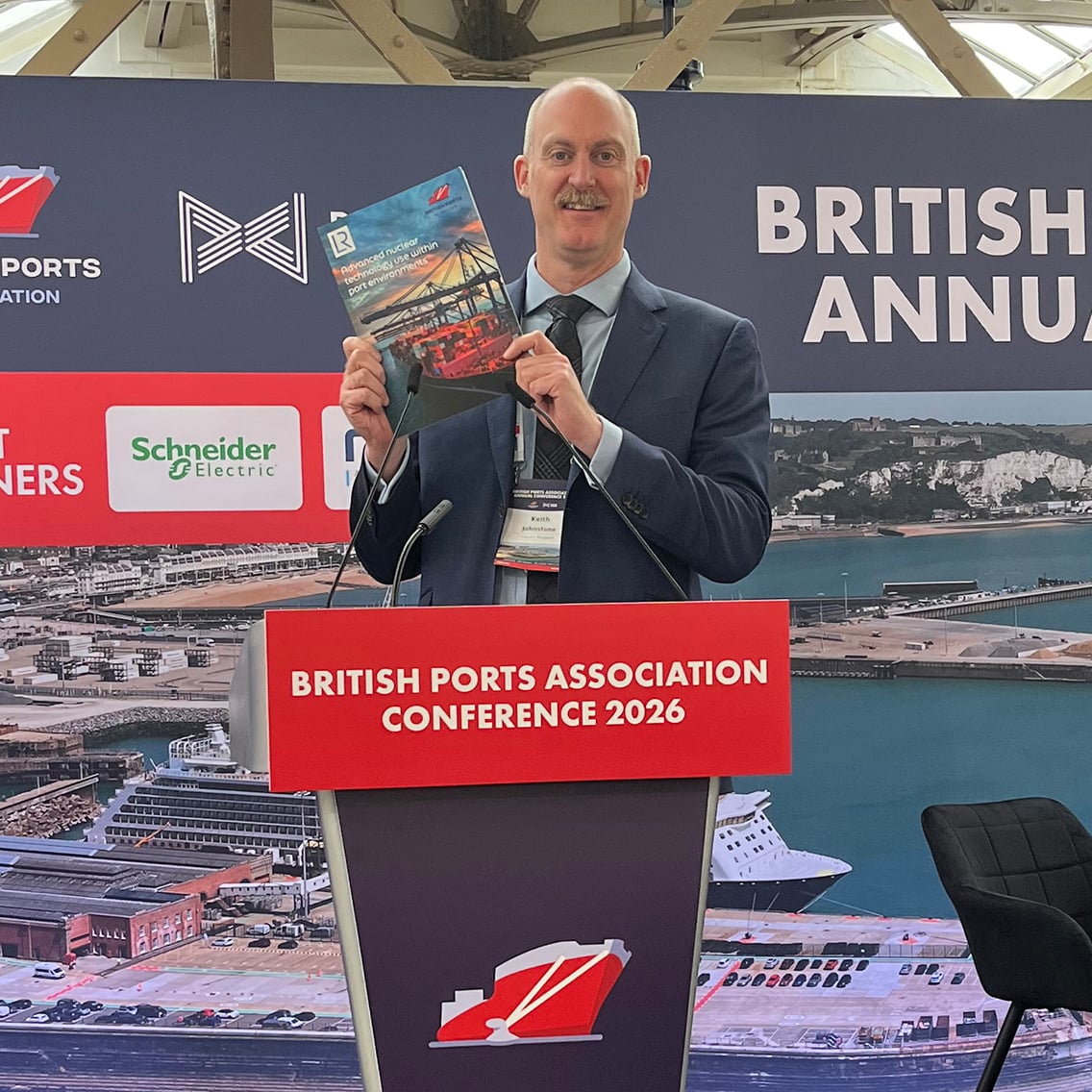
In a joint white paper published, titled “Advanced Nuclear Technology Use Within Port Environments”, the organizations argue that ports should approach nuclear technology as a long-term infrastructure and operational planning issue rather than simply another alternative marine fuel.
The report examines three potential applications: nuclear-powered merchant vessels calling at commercial ports, floating or transportable nuclear power plants, and land-based small modular reactors (SMRs) or microreactors supporting port operations.
According to LR and BPA, the principal challenges extend beyond technical development to include regulatory uncertainty, governance, insurance, workforce competence, emergency response capabilities and public confidence.
Integrating nuclear risks into port safety systems
The report emphasizes that nuclear-powered vessel calls would require additional safety arrangements, even though conventional operations such as pilotage, berthing, cargo handling and departure would remain broadly similar.
Ports would need to establish procedures covering pre-arrival safety documentation, vessel authorization, berth suitability, radiation monitoring, access restrictions, security arrangements and emergency preparedness. Clear responsibilities would also be required between port operators, harbour authorities, maritime regulators, nuclear regulators and emergency services.
Rather than establishing separate safety-management structures, the report recommends integrating nuclear-specific requirements into existing port systems. Established controls for dangerous goods, hazardous cargoes, simultaneous operations and other high-consequence activities could provide a foundation, supplemented by specialist monitoring, competence and assurance.
Emergency preparedness is identified as a particular priority. Existing arrangements are generally designed around conventional maritime incidents, land-based nuclear facilities or radioactive material transport, potentially leaving gaps in responding to emergencies involving commercial nuclear-powered vessels.
The report therefore calls for coordinated emergency planning, clearly assigned responsibilities, specialist training and realistic exercises involving maritime and nuclear authorities.
Regulatory and liability gaps remain significant
LR and BPA identify regulatory alignment as one of the main obstacles to the future commercial operation of nuclear-powered ships. The report notes that existing international maritime nuclear frameworks predate modern advanced reactor designs.
SOLAS Chapter VIII establishes requirements for nuclear ships, while the IMO’s Code of Safety for Nuclear Merchant Ships, adopted in 1981, is undergoing review.
However, differences between maritime and nuclear regulatory systems continue to create uncertainty over licensing, operational responsibilities and port entry requirements.
The white paper draws on an earlier joint development project involving LR, CORE POWER, A.P. Moller–Maersk and the Port of Rotterdam, which examined the safety and regulatory implications of a nuclear-powered feeder containership calling at a European port.
That assessment identified three recurring barriers: limited regulatory provisions for civilian nuclear-powered merchant ships, insufficient integration between maritime and nuclear safety regimes, and unclear licensing, insurance and liability requirements for ports.
The report also highlights the absence of a comprehensive international liability framework for nuclear-powered commercial vessels, noting that the 1962 Brussels Convention on the Liability of Operators of Nuclear Ships never entered into force.
According to the authors, addressing these uncertainties will require coordinated action involving ports, governments, regulators, classification societies, insurers and technology developers.
Four levels of port nuclear readiness
To support proportionate planning, the white paper proposes a four-tier framework allowing ports to determine their level of preparedness according to their operational needs and strategic priorities.
The proposed levels range from basic awareness to the integration of nuclear energy infrastructure:
Tier 1 – Nuclear-aware: Ports understand the regulatory landscape, identify relevant stakeholders and can assess nuclear-related inquiries with specialist assistance.
Tier 2 – Nuclear-ready: Ports identify potentially suitable berths or sites, train relevant personnel, assess monitoring requirements and conduct initial emergency and security exercises.
Tier 3 – Nuclear-enabled: Ports establish the capabilities to accommodate recurring nuclear-powered vessel calls, potentially including specialist inspection, maintenance and logistical services.
Tier 4 – Nuclear energy hub: Ports integrate floating, transportable or land-based nuclear power generation into their energy infrastructure while supporting nuclear-related maritime operations.
The report stresses that advanced nuclear technology will not be appropriate for every port and that readiness should reflect local conditions, energy requirements, available infrastructure and regulatory considerations.
Early planning recommended before investment
LR and BPA recommend that ports begin preparing through stakeholder engagement, regulatory dialogue, scenario planning and assessments of existing safety-management arrangements. Initial actions could include evaluating future electricity demand and grid constraints, identifying possible berths or sites, reviewing emergency response capabilities and assessing workforce training needs.
The report also emphasizes the importance of engaging local communities and providing transparent information about safety requirements, responsibilities and proposed operations.
It outlines a staged pathway from initial planning and feasibility assessment to project development and eventual deployment, with major investments dependent on regulatory, safety, commercial and community considerations.
Beyond supporting nuclear-powered vessels, advanced reactors could provide low-carbon electricity for shore power, cargo-handling equipment, cold storage and neighboring industrial facilities. Other potential applications include industrial heat, hydrogen and synthetic fuel production, and specialist maritime services.
However, the authors emphasize that these opportunities remain dependent on location-specific assessments and the development of appropriate regulatory and commercial frameworks.
Richard Ballantyne, Chief Executive of the BPA, noted that advanced nuclear may not be suitable for every port but emphasized the importance of understanding its potential applications and beginning preparations early.
Similarly, Mark Tipping, Global Offshore Power-to-X Director at LR, highlighted the need for stronger governance, proportionate safety assurance and cooperation between the maritime and nuclear sectors.
Content Original Link:
" target="_blank">