












A new IMarEST consultation has identified regulatory uncertainty, infrastructure gaps and misaligned commercial incentives as major barriers to shipping’s net-zero
A new IMarEST consultation has identified regulatory uncertainty, infrastructure gaps and misaligned commercial incentives as major barriers to shipping’s net-zero transition.
Published ahead of the IMO’s Marine Environment Protection Committee (MEPC 85) meeting, the consultation gathered insights from 37 maritime professionals across ship management, consultancy, classification, academia and equipment manufacturing. Conducted through the Institute of Marine Engineering, Science and Technology’s (IMarEST) Ship Energy and Environment Special Interest Group (SEESIG), the study examines the challenges affecting the implementation of the IMO’s decarbonization objectives.
As hoighlighted, while respondents broadly supported the IMO’s 2023 GHG Strategy and its objective of achieving net-zero emissions from international shipping by or around 2050, many questioned whether existing regulatory measures, infrastructure development and commercial arrangements could deliver the transition at the required pace.
According to IMarEST, the findings indicate that the challenge is increasingly shifting from setting decarbonization ambitions to establishing the practical conditions needed to achieve them.
Regulatory certainty remains a major concern
The consultation identifies long-term regulatory certainty as one of the strongest requirements for accelerating investment. Respondents highlighted uncertainty surrounding future fuel pathways, carbon-pricing mechanisms, infrastructure development and fuel availability.
Although participants expressed confidence in energy-saving technologies and operational efficiency improvements, investment confidence was weaker regarding alternative-fuel vessels, fuel production and bunkering infrastructure.
The report suggests that technology readiness alone is not the principal barrier. Instead, uncertainty over regulatory requirements and the availability of supporting infrastructure is making long-term investment decisions more difficult.
We are not seeing opposition to the Net-Zero Framework, or to decarbonisation as a principle. This is extremely encouraging as the industry seeks clarity at MEPC85. In fact, our industry snapshot suggests that marine professionals are now increasingly focussing on whether the transition can be delivered at the pace required.
…commented Alasdair Wishart, Director of Technical and Policy at IMarEST.
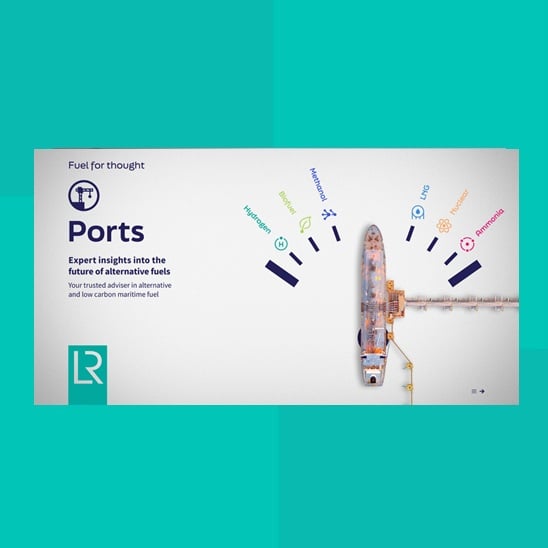
The findings also reinforce concerns about the growing mismatch between vessel investment and alternative-fuel availability, as highlighted in a recent Lloyd’s Register assessment.
CII and SEEMP require stronger implementation
The consultation raises questions about the effectiveness of existing IMO measures, particularly the Carbon Intensity Indicator (CII) and Ship Energy Efficiency Management Plan (SEEMP).
Respondents acknowledged that CII has increased awareness of emissions performance and encouraged greater monitoring of vessel efficiency. However, many argued that the framework does not adequately reflect operational circumstances beyond the ship’s control.
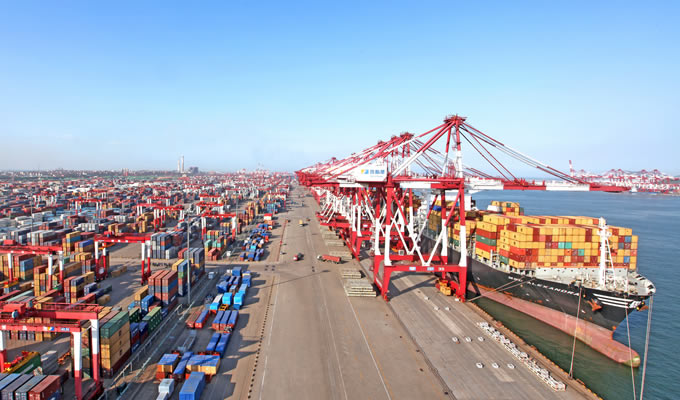
Port congestion, anchorage waiting times, charter-party requirements and commercial schedules were identified as factors that can influence a vessel’s emissions performance without being directly controlled by its operator.
Consequently, the report calls for CII to better reflect operational realities and recognize the responsibilities of other participants in the maritime value chain.
These concerns are particularly relevant to ongoing discussions about the CII framework, including BIMCO’s proposal to place greater emphasis on fuel consumption while underway.
SEEMP received stronger support among respondents, although the consultation identified concerns that it frequently functions as a compliance exercise rather than an active performance-management system.
The report recommends strengthening SEEMP through measurable key performance indicators, digital monitoring, benchmarking and greater management accountability.
Operational efficiency offers immediate opportunities
One of the consultation’s clearest findings is that substantial emissions reductions could be achieved through existing operational measures while alternative fuels and propulsion technologies continue to develop.
Respondents identified several measures offering particularly strong near-term potential:
- Just-in-Time arrivals: Reducing unnecessary waiting and improving coordination between ships and ports.
- Speed optimization: Improving voyage efficiency through more effective speed management.
- Voyage optimization: Using operational planning and available technologies to reduce fuel consumption.
- Digital performance monitoring: Supporting more informed decisions through continuous measurement and analysis.
These measures received support across the sectors represented in the consultation, reflecting their relatively modest investment requirements and potential for measurable improvements. However, the report also emphasizes that operational efficiency cannot be achieved through vessel-level decisions alone.
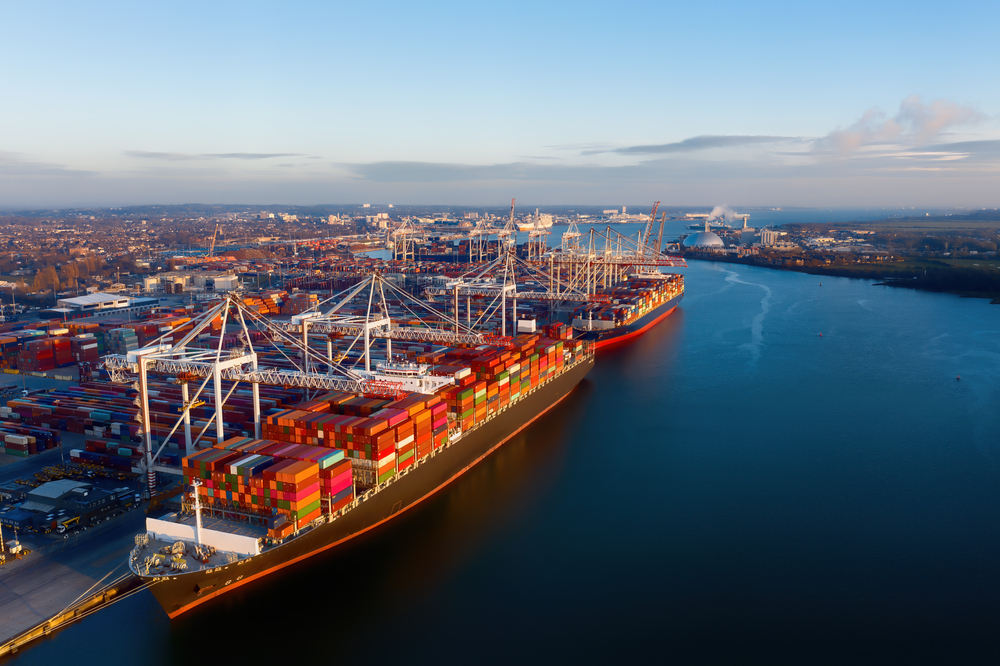
Effective Just-in-Time arrivals, for example, depend on coordination between shipowners, charterers, terminal operators and port authorities. Commercial scheduling requirements and delays can limit the ability of vessels to optimize their operations.
Decarbonization requires shared responsibility
A central conclusion of the report is that shipping’s transition cannot be treated exclusively as a vessel-level challenge.
Respondents identified a mismatch between the parties making investments in efficiency improvements and those influencing operational decisions. Shipowners may invest in new technologies, while charterers influence voyage schedules, ports affect waiting times and operators remain responsible for regulatory compliance.
This separation of responsibilities can weaken incentives to improve performance and prevent available technologies from delivering their full potential.
The consultation therefore calls for greater accountability across the maritime value chain, including shipowners, operators, charterers, cargo owners, ports, fuel suppliers and policymakers.
IMarEST also highlights the importance of collaboration in overcoming these barriers, particularly in areas such as infrastructure investment, fuel availability and operational coordination.
No single fuel pathway will deliver the transition
The consultation indicates strong support for maintaining a technology-neutral approach to maritime decarbonization, recognizing that different vessel types and trading patterns will require different solutions.
Methanol, ammonia, biofuels, batteries, hydrogen and wind-assisted propulsion were identified among the potential pathways, although respondents did not establish a preference for one universal solution.
The report also identifies fuel production capacity, bunkering infrastructure, shore power and electricity grid development as critical requirements for supporting the transition.
Alongside infrastructure development, respondents emphasized the importance of a just and equitable transition, including access to financing, technology transfer, training and assistance for developing economies.
Priorities ahead of MEPC 85
Based on the consultation, IMarEST identifies several priorities for strengthening implementation of the IMO’s GHG Strategy, including refining CII, making SEEMP a more effective performance-management instrument, accelerating operational efficiency measures and supporting technology-neutral fuel pathways.
The report also recommends stronger economic incentives, more predictable long-term regulations and greater coordination across the shipping value chain.
Rather than fundamentally revising the IMO’s 2023 GHG Strategy, the consultation favors improving the measures and conditions required to implement it.
[…] But we are seeing that the sector requires answers on how to create the conditions needed for investment confidence for fuels and infrastructure, as well as facilitation to kickstart collaboration on decarbonisation across the sector.
…Wishart further highlighted.
Content Original Link:
" target="_blank">