










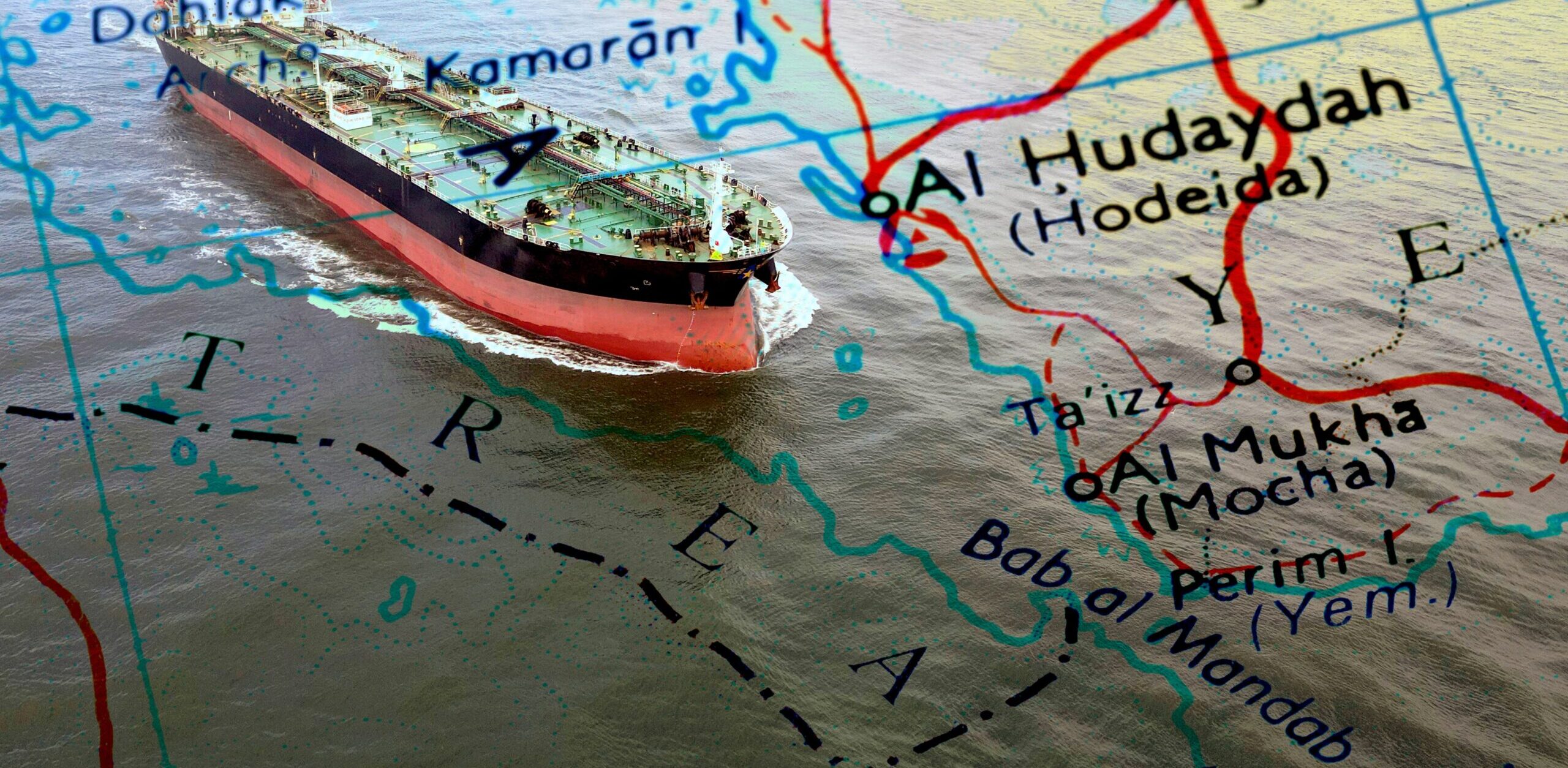
Bab al-Mandab disruption raises risk of wider regional escalation
Disruptions to shipping through the Bab al-Mandab Strait are increasing the risk of wider regional escalation, as Houthi attacks threaten one of the main alternative routes for Middle Eastern oil exports, according to analysis by W. Schreiner Parker, Partner and Head of Emerging Markets & NOCs at Rystad Energy.
In the analysis, “The Unbroken Glass: Bab al-Mandab and the Risk of Asymmetric Escalation”, Parker examines how actions by a non-state group can trigger disproportionate responses from regional powers, creating consequences for maritime trade, energy security and international shipping markets.
The analysis highlights the growing vulnerability of alternative oil export routes following the effective closure of the Strait of Hormuz after the conflict began on February 28, 2026.
Saudi crude loadings at Yanbu, on the Red Sea, increased from approximately 800,000 barrels per day (bpd) to around 5 million bpd in March, with roughly 80% of that volume initially moving south through Bab al-Mandab. However, the Houthi campaign launched in July placed this alternative route under increasing pressure.
Houthi campaign threatens Red Sea shipping
According to Parker, Houthi missile attacks against Israel in March developed into a wider campaign that ended the group’s four-year ceasefire with Saudi Arabia. On July 20, the Houthis announced an embargo targeting Saudi vessels while indicating that other commercial shipping could continue passing through Bab al-Mandab.
Although most vessels reportedly continued transiting without incident, weekly passages through the strait declined from 354 to 269 during the first week of the embargo.
The situation escalated further in September. Drone attacks on September 10 damaged pumping stations along Saudi Arabia’s East-West pipeline, which had become a major export route following the disruption at Hormuz. Riyadh attributed the attacks to launches from Iraqi territory, while the pipeline resumed operations at reduced capacity on September 22.
The analysis also reports that Houthi forces claimed control of the port of Mocha and Perim Island in mid-September. Yemeni government forces subsequently claimed to have recaptured Mocha on October 5, although the Houthis disputed that account.
Perim Island is strategically significant because it divides the narrowest section of Bab al-Mandab into two navigational passages, approximately 17 kilometers and 2.5–5 kilometers wide.
Parker warns that control of this position could strengthen the Houthis’ ability to disrupt shipping through relatively inexpensive weapons, including sea mines and explosive drone boats.
Regional responses increase escalation risks
The analysis identifies the activation of collective deterrence measures under the Makkah Joint Defense Agreement between Saudi Arabia, Turkey and Pakistan as an indication of the conflict’s wider regional implications.
The agreement, concluded in August, was invoked in early October in response to the developing security situation. However, Parker emphasizes that the October 5 announcement concerned collective deterrence measures rather than a confirmed military deployment.
No troop numbers or deployment dates had been announced, while Turkey’s parliament had yet to ratify the agreement.
The analysis describes the situation as a risk of asymmetric escalation, in which relatively limited actions by a non-state actor prompt responses from more powerful states, potentially producing consequences that none of the participants originally intended.
Parker draws comparisons with the 1956 Suez Crisis, emphasizing how separate decisions by governments can combine to produce wider geopolitical and commercial disruption. Nevertheless, he also identifies reasons for restraint, including the financial and military costs of escalation and the limited appetite among regional governments for a prolonged confrontation.
Oil export diversions face new constraints
The disruption has exposed the limitations of alternative routes for Middle Eastern oil exports. According to the analysis, crude loadings in the Middle East declined from approximately 19.4 million bpd in February to 10 million bpd in March following the effective closure of Hormuz.
As the Houthi campaign threatened southbound movements through Bab al-Mandab, more crude was redirected through Egypt’s Sumed pipeline, which has a capacity of approximately 2.5 million bpd.
The pipeline allows crude discharged on Egypt’s Red Sea coast to be transported to the Mediterranean for reloading. This is particularly important for very large crude carriers, which cannot transit the Suez Canal fully laden.
Parker notes that the resulting arrangements demonstrate how bypassing one maritime chokepoint can create greater dependence on another route with its own geographical and operational limitations.
The analysis also points to longer-term changes in LNG shipping patterns. In 2023, approximately one-third of US LNG exports to Asia passed through the Suez Canal. Following the Red Sea disruptions beginning in January 2024, this trade largely shifted toward the Cape of Good Hope, with 88% using that route by 2025.
Freight and oil markets reflect rising costs
The combined disruptions have also affected energy prices and tanker freight markets.
According to Rystad Energy’s analysis, Brent crude traded above $108 per barrel in mid-September before moving between approximately $98 and $101 during the first week of October. Meanwhile, shipowner earnings for a direct Saudi Arabia–China voyage by a very large crude carrier exceeded $1 million per day in September.
The additional shuttle arrangements required to move crude through alternative export routes also increased the estimated cost of delivering a barrel to China from approximately $2 before the conflict to around $26.
These developments illustrate the financial consequences of prolonged disruption, as longer voyages, additional cargo transfers and constrained export infrastructure increase transportation costs.
Parker concludes that shipping and energy markets have so far adapted through rerouting, additional pipeline movements and longer voyages, preventing the disruption from fundamentally restructuring the market.
However, the duration of the crisis remains a critical factor.
While the current assessment does not assume an uncontrolled escalation, Parker warns that the interaction between regional security responses and maritime chokepoint vulnerabilities could create increasingly difficult conditions for shipping and energy markets.
Content Original Link:
" target="_blank">