













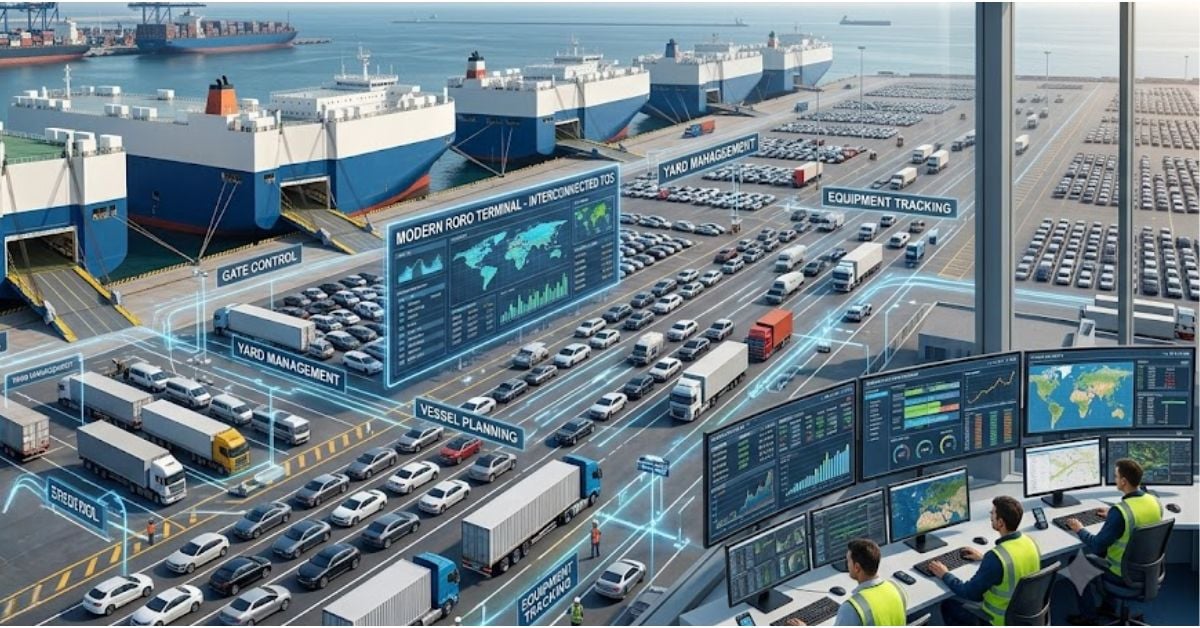
For most cargo terminals, available land and storage capacity play a major role in determining how much cargo a terminal can handle. In a container terminal, containers can be stacked vertically, while bulk cargo can often be stored in piles.
A RoRo terminal is different. Every vehicle requires a dedicated parking position, which means the effective capacity of the terminal is closely linked to how quickly vehicles move through the facility and how long they occupy valuable yard space.
This makes dwell time one of the most important, yet often overlooked, factors affecting RoRo terminal capacity and efficiency.
Recent industry reports have highlighted how European automotive ports experienced increasing pressure from slower vehicle rotation and longer storage periods, even when overall vehicle volumes declined. This demonstrates an important point: throughput alone does not tell the complete story of terminal performance.
A study by Automotive Logistics found that even though the cargo handled by the majority of European car ports in 2025 is less than what was handled
Content Original Link:
" target="_blank">