






Eastern Pacific Shipping (EPS) has named Terra Clove, which the company describes as the world’s first ammonia dual-fuel Very Large
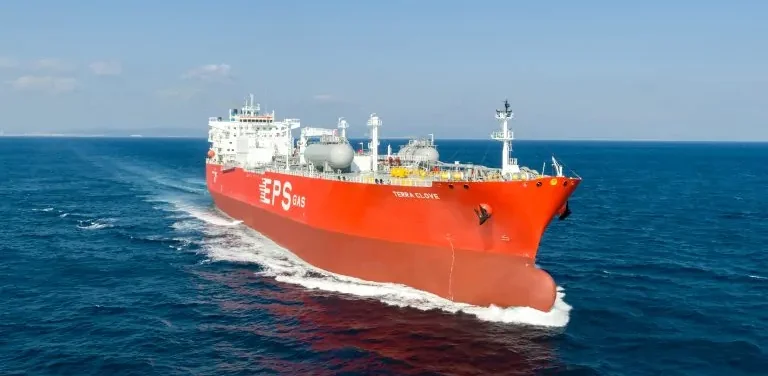
Eastern Pacific Shipping (EPS) has named Terra Clove, which the company describes as the world’s first ammonia dual-fuel Very Large Ammonia Carrier (VLAC), marking a milestone in the development of ammonia-powered commercial shipping.
Built by HD Hyundai Heavy Industries (HHI), the 93,000-cbm vessel was named during a ceremony in Ulsan, South Korea. Terra Clove is designed to transport ammonia as cargo while also using it as fuel, retaining the flexibility to operate on conventional marine fuels.
According to EPS, the vessel represents the first seagoing application of Everllence’s two-stroke ammonia engine technology. Following the naming ceremony, EPS intends to bunker Terra Clove with green ammonia at LOTTE Fine Chemical’s terminal in Ulsan.
The ammonia, produced by Envision Energy, will be used to support the vessel’s ammonia-burning trials, providing operational experience with the new propulsion technology.
Safety systems and crew training
The vessel’s development follows a collaboration established in September 2023 between EPS, HHI, Everllence, the Maritime and Port Authority of Singapore (MPA) and ABS. Beyond engine and vessel design, the project has involved technical assurance, regulatory engagement and specialized crew training to address the safety challenges associated with ammonia propulsion.
Ammonia’s toxicity requires particular attention to fuel handling, leak detection, containment and emergency response procedures. EPS personnel have also worked alongside Everllence engineers to develop the technical knowledge and operational capabilities needed to operate ammonia dual-fuel engines safely.
Commenting on the project, EPS CEO Cyril Ducau emphasized that preparing for ammonia-powered shipping requires more than the development of suitable engines. “It requires the right vessel design, safety systems, operating procedures, infrastructure and, most importantly, trained and capable seafarers.” Ducau said.
During the ceremony, EPS and the Mærsk Mc-Kinney Møller Center for Zero Carbon Shipping also formalized a partnership to collaborate on alternative fuels, dual-fuel vessels, energy efficiency and maritime emissions.
The cooperation includes research into ammonia safety and an upcoming white paper examining vessel design, operational safety and training considerations for ammonia-fueled VLACs, expected later in 2026.
Content Original Link:
" target="_blank">