










Protected areas have been set up to shield deep-sea life from the impacts of seabed mining in the Pacific Ocean. However, new research led by scientists at Plymouth Marine Laboratory (PML) and
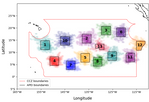
Protected areas have been set up to shield deep-sea life from the impacts of seabed mining in the Pacific Ocean. However, new research led by scientists at Plymouth Marine Laboratory (PML) and published in Nature Ecology & Evolution, highlights an opportunity to make these protections even more effective. The study suggests that adding a small number of strategically located protected areas could help transform existing reserves into a more connected network, enabling tiny drifting larvae that have been cast adrift after disturbance to recolonize more successfully.
The research team focused on the Clarion Clipperton Zone (CCZ), a stretch of abyssal seafloor in the central Pacific roughly the size of Europe, lying around 5,000 meters down. This area has become a global hotspot for prospecting because its floor is scattered with polymetallic nodules, which are potato-sized lumps of rock rich in nickel, cobalt and other metals used in all electronics.
More than 1.1 million square kilometers of the CCZ are already licensed for mining exploration, and commercial extraction could begin within years. However, governments, scientists and environmental groups have long been concerned about the significant impact mining operations would have on these types of valuable habitats.
Why protecting the abyssal seafloor
Content Original Link:
" target="_blank">